

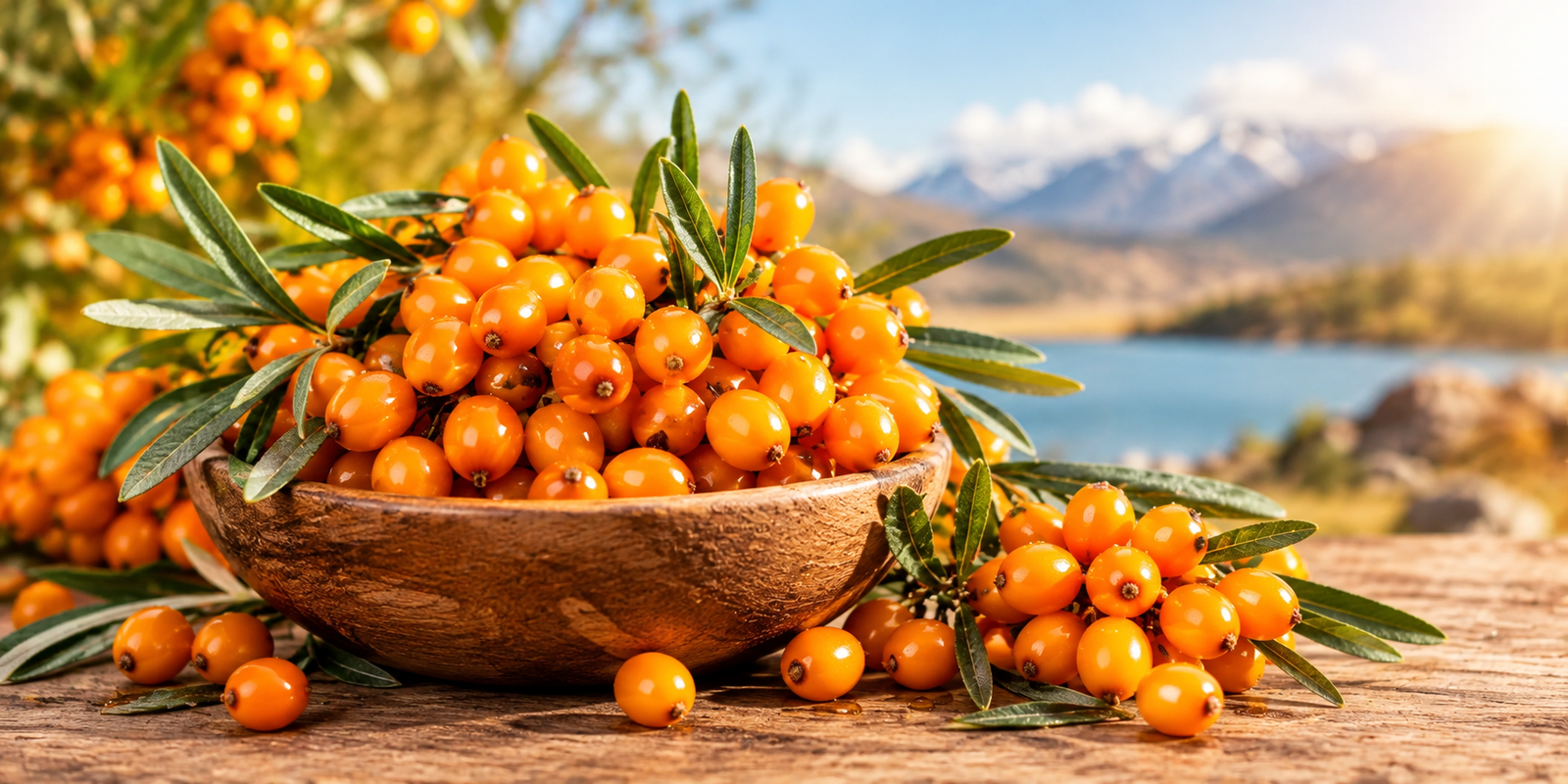
Sea buckthorn berry is a thing of natural beauty. This small yellow-to-orange or reddish fruit possesses a unique color, sharp taste and complex set of beneficial substances. Sea buckthorn berries grow on a thorny shrub wildly growing in several regions of Eurasia, including the Himalayas. The fruit has long been used in culinary traditions and is currently subject of extensive scientific research, as well as being an ingredient in cosmetics and food products.
The properties of sea buckthorn berries are defined not only by their nutrition content. The plant’s habitat, the period of fruit maturity and the technology of processing impact the qualities and composition of the final product. This article focuses on the origin and nutritional content of sea buckthorn berries, as well as the traditional uses and modern processing methods.
What Is Sea Buckthorn Berry?
Sea buckthorn is a fruit-bearing shrub belonging to the Elaeagnaceae family. Its commonly referenced scientific name is Hippophae rhamnoides L., although Elaeagnus rhamnoides is also used as a botanical name in some modern taxonomic literature.
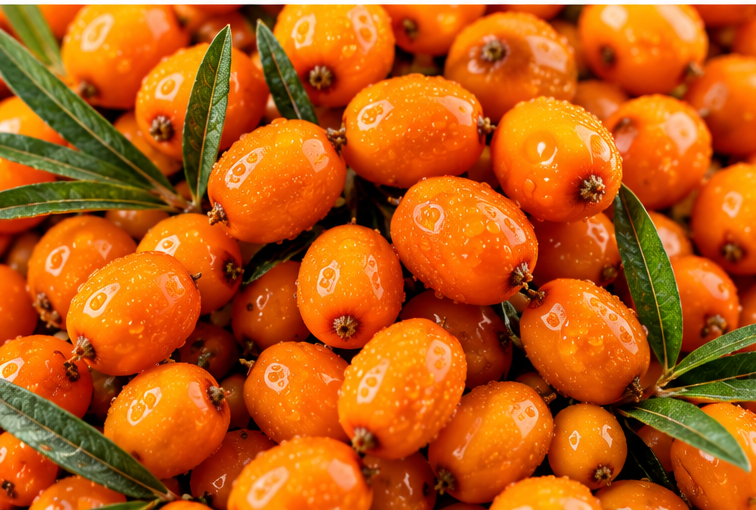
The plant produces small, fleshy berries that generally range from yellow and orange to reddish-orange. They grow close together along the branches, which can make harvesting difficult because the shrub has numerous sharp thorns.
Sea buckthorn berries have a characteristic tart and acidic flavour. Their colour, flavour and naturally occurring constituents make them suitable for use in different food preparations and for further processing into fruit-derived ingredients.
The term sea buckthorn berry refers to the fruit itself. It should not be confused with sea buckthorn seed oil, pulp oil, leaf extracts or concentrated fruit preparations. Although these materials come from the same plant, their compositions and intended applications can differ.
Botanical Origin and Geographical Distribution
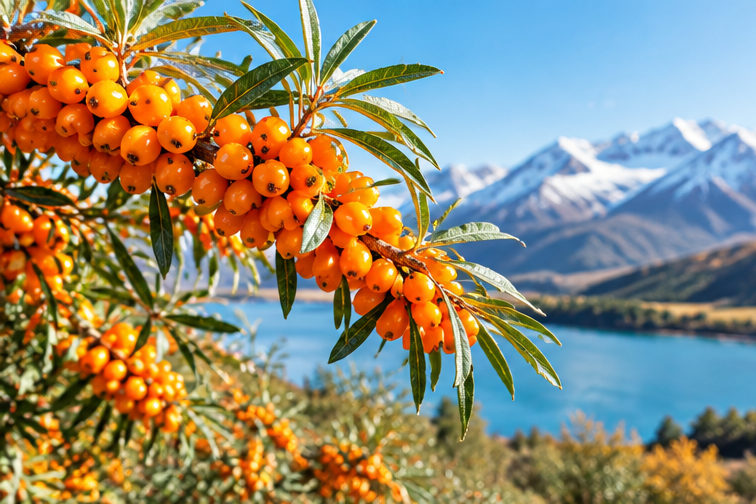
Sea buckthorn grows naturally in the Eurasia region, often found in cold-temperate areas. The plant’s natural habitat includes multiple geographical regions within Europe and Asia.
Within India, sea buckthorn is typically found in Himalayan high-altitude regions such as Ladakh. It has been found to grow in rocky and arid climates with cold temperatures.
Sea buckthorn shrubs are also found in neighboring countries such as China, Mongolia, and Russia, as well as the rest of Eurasia. There are several variations of the plant and its subspecies. Therefore, the origin of a specific type of sea buckthorn berry should be researched according to the botanical specifics of the manufacturer.
For the ingredient supplier or manufacturer, it may be helpful to identify the plant’s native region depending on the desired quality and characteristics of the harvested material. Country of origin, growing region, botanical classification, and documentation provided by the manufacturer are all relevant factors to consider when purchasing sea buckthorn berries or products.
Natural Composition of Sea Buckthorn Berry
Sea buckthorn berries contain a variety of naturally occurring compounds. Published botanical and food science literature identifies several broad groups, although their amounts can vary considerably between samples.
Carotenoids
Carotenoids are naturally-occurring pigments that are commonly found in many fruits and vegetables. They are responsible for the yellow, orange and reddish hues of many foods including the sea buckthorn berry. Those carotenoids reported in sea buckthorn include beta-carotene and other related pigments, depending on the plant material and analytical procedures used.
Vitamins
Vitamin C and vitamin E have been reported in sea buckthorn fruit. Since these are naturally-occurring compounds, their levels may vary in different batches of berries or finished products. A wide range of growing conditions, variety, fruit maturity, storage and processing methods may affect the levels of vitamins in the final ingredient.
Thus, the presence of a naturally-occurring vitamin should not be used as an indicator of a particular nutritional value of a given product. Product-specific specifications must be determined by appropriate laboratory testing.
Polyphenols and Flavonoids
Polyphenols represent a large class of naturally-occurring plant compounds and flavonoids are considered to be sub-class of polyphenols. A number of different research papers have reported the presence of various polyphenols and flavonoids in sea buckthorn materials.
Depending on the plant part analysed, the type of extract, extraction procedures and analytical methodologies used, different findings can be reported. Therefore, results obtained from seeds, leaves or concentrated extracts should not be extrapolated to whole berries or other ingredients.
Organic Acids, Sugars and Lipids
Naturally-occurring organic acids and sugars are known to be responsible for the distinctive taste and pleasant aroma of the sea buckthorn berry. Lipids (or oils) are also found in sea buckthorn, with their levels being different in the juicy part of the berry and in the seed.
This is why whole berries, juice, pulp oil and seed oil are considered as fundamentally different ingredients when studying their nutritional aspects and developing new food products. There are no universal norms since any given sea buckthorn-derived material will have a unique combination of nutrients. Analytical laboratory testing is the only way to determine the exact nutritional characteristics of a particular ingredient.
Traditional and Historical Context
Sea buckthorn Berry has a history of traditional use in Asia, in the territories of Tibet, Mongolia, and China. It has been used in the traditional medicine of these countries to address a variety of health conditions. The parts of the plant that were used included berries, seeds, and leaves.
The traditional use of sea buckthorn varies regionally and historically. Information on the use of the product in the past helps understand how the plant was used in different geographic areas, but it does not confirm or refute the effectiveness of a modern ingredient in a specific application.
Modern botanical, nutritional, and ingredient research practices allow evaluating the benefits of sea buckthorn for contemporary uses and applications. Therefore, the information on traditional applications should be considered separately from the scientific data on botanical extracts.
Common Forms and Processing of Sea Buckthorn Berry
Sea buckthorn berries can be used whole or processed into various products and ingredients. The form and quality of the ingredient depend on the intended use and the technologies applied.
Fresh or frozen berries: Whole fruit can be used fresh or frozen. The choice of one or another option depends on the supply chain and storage conditions.
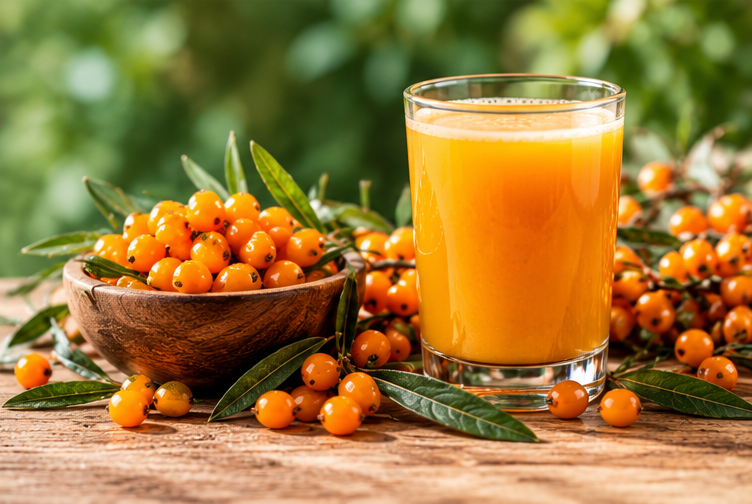
Sea buckthorn juice: The berries can be pressed to obtain juice, which, when separated from the pulp, will have the consistency and qualities of clear juice. The technology of pressing and the additional processing of juice can affect its qualities.
Fruit pulp and puree: Puree and pulp are products obtained by pressing the berries, which contain a certain amount of flesh. The qualities and consistencies of the two products differ depending on the technology used.
Dried berries and berry powder: The berries can be dried at certain temperatures to obtain a powder. The technology of drying influences the final qualities of the ingredient.
Sea buckthorn oils: The oils can be obtained from the pulp or seeds of the berries. The oil qualities and consistencies depend on the raw material used and the technology of pressing.
The processing technologies should be clarified with the supplier since the qualities of the ingredient depend on the conditions of the process. The details on temperature, technologies of extracting, filtering, concentration, or other processes should be specified for each ingredient separately.
Common Applications of Sea Buckthorn Berry
Food and Beverage
Sea buckthorn fruit is utilised in food preparation and is incorporated into juices, jams, jellies, sauces and other fruit-based formulations. Its naturally occurring tart flavour and distinct colour can provide desired sensory attributes to a formulation.
The properties of fruit ingredients can be combined with other materials to achieve desired taste, texture or appearance. Product formulation and processing requirements will depend on the desired end-product.
Nutraceutical and Botanical Ingredient Development
Materials derived from sea buckthorn are utilised in the development of botanical and nutraceutical products. However, whole berries, fruit powders, juices and concentrated extracts are not interchangeable and their identity, composition and suitability for a particular formulation must be determined separately.
Any product designated for a specific market must also satisfy the applicable requirements for its category, composition, labelling and permissible claims.
Cosmetics and Personal Care
Sea buckthorn-derived materials, particularly oils, are used in some cosmetic and personal care formulations. The particular material selected is dependent on its formulation properties, compatibility with other ingredients and the requirements of the end product.
A cosmetic formulation containing sea buckthorn oil should not be assumed to possess the same content or qualities as one containing whole berry ingredients or juice. Ingredient selection and product claims require separate assessment.
What Influences Sea Buckthorn Berry Quality?
The characteristics of sea buckthorn berry ingredients can vary between sources. A number of characteristics are pertinent when determining raw materials.
- Botanical identity: Determining the species enables distinguishing of the desired material from other plants and similarly named ingredients.
- Geographical origin: Growing conditions and source region can affect fruit characteristics.
- Variety and maturity: Differences in plant variety and harvest stage can affect colour, flavour and formulation.
- Processing method: Differences occur in pressing, drying, freezing, concentration and oil extraction.
- Storage and transportation: Post-harvest conditions can affect the state of the material and the quality of the finished ingredient.
- Testing and documentation: Specifications, batch records and appropriate analytical reports can be used to determine the identity and measured attributes of a supplied ingredient.
For manufacturers and ingredient buyers, these factors are more beneficial than a general description of sea buckthorn as a single, uniform raw material.
Conclusion
Sea buckthorn berry is a fruit-bearing botanical ingredient that is well established within food preparations and various developing ingredient applications. Its botanical origin, naturally occurring carotenoids, vitamins, polyphenols, organic acids and lipids make it an established subject of food science and botanical research.
The composition of sea buckthorn is dictated by the plant material, environmental conditions, maturity and processing method. Whole berries, juice, pulp, powder and seed or pulp oils should therefore be evaluated as separate ingredient formats.
A clear understanding of botanical identity, sourcing, processing and product-specific testing provides a more reliable basis for describing sea buckthorn berry than general or unverified claims. Accurate ingredient information allows manufacturers, formulators and consumers to understand what a particular sea buckthorn material is and how it may be suitable for an appropriate product.
Disclaimer: This article is provided for general educational and informational purposes only. It is not intended as medical advice and should not be interpreted as a statement that sea buckthorn berry or products containing it diagnose, treat, cure or prevent any disease or medical condition.